Govt weighs common policy for primary institutions, he says
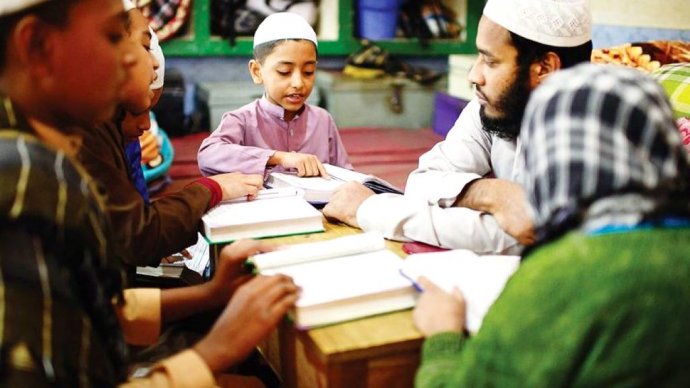
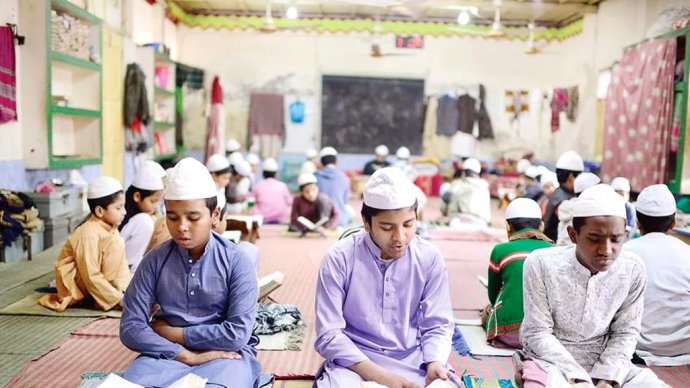
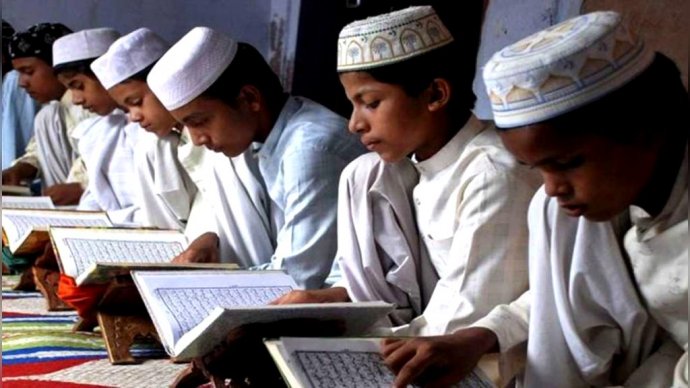
Education Minister ANM Ehsanul Hoque Milon today said Bangladesh has an estimated 25,000 Qawmi madrasas, with around 70 lakh students enrolled.
Responding to a question from Golam Rasul MP during the question-and-answer session in parliament, the minister said the country currently has 65,569 government primary schools with 99,58,246 students and 32,663 kindergarten schools with 60,89,313 students.
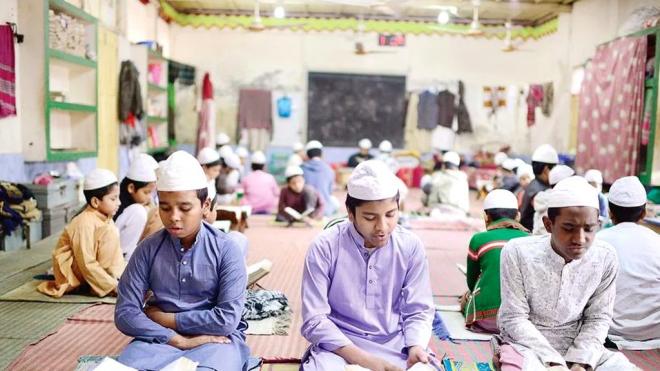
He said the government is formulating a comprehensive national policy covering all types of primary education institutions to ensure the teaching of basic subjects included in the mainstream primary curriculum and to develop students’ skills.
The minister said there are also 9,295 affiliated Ibtedayi madrasas with about 15 lakh students and 7,528 independent Ibtedayi madrassas enrolling around 10 lakh students.
He added that Hafiziya and Noorani madrasas are generally included within the Qawmi madrassa system.
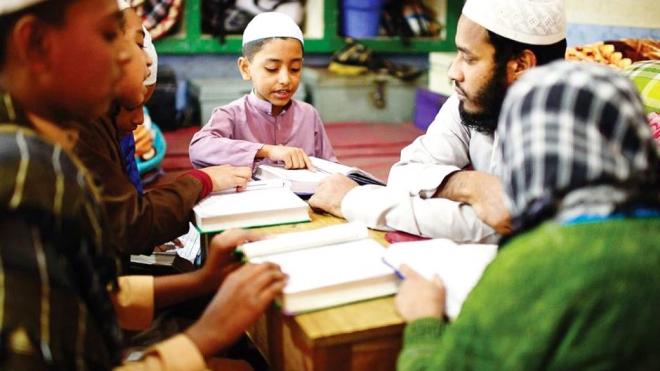
The minister said there is currently no separate or unified policy for developing skills in these institutions. However, the government is considering introducing English, mathematics, science and information technology while keeping the core curriculum of all such institutions intact.
The figures cited by the minister relate to Qawmi madrasas that are not regulated by the government.
Earlier, an unpublished 2015 report by the Bangladesh Bureau of Educational Information and Statistics (BANBEIS) found that 14 lakh students were studying in 13,902 Qawmi madrasas across the country.
The report, prepared following directives from the then Prime Minister’s Office, was the first-ever study conducted on Qawmi madrasas in Bangladesh.
According to the BANBEIS report, 12,693 of the Qawmi madrasas were for male students and 1,209 for female students. A total of 10,58,636 male and 3,39,616 female students were enrolled, while 73,731 teachers were employed at the institutions.