
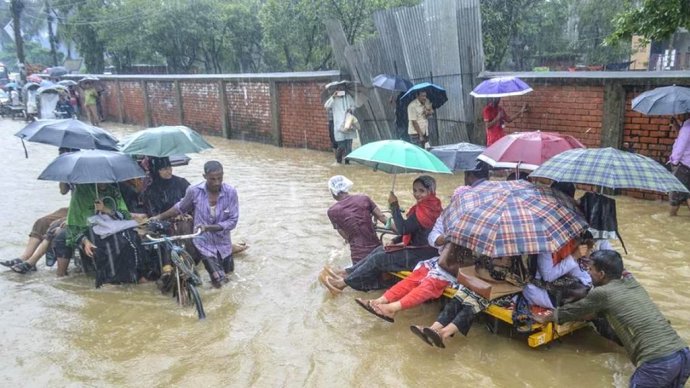
Thousands of people remain stranded in parts of Banshkhali
Floodwaters triggered by days of heavy rain and landslides have started receding across Chittagong, exposing widespread devastation.
Houses have collapsed, roads have been damaged, cropland and vegetable fields have been destroyed, fish worth crores of taka have been washed away from farms, and poultry farms have suffered extensive losses. As residents return home, many are left in tears after seeing the scale of the destruction.
In Satkania upazila, floodwaters began receding on Monday, allowing many people to return from government shelters. However, they found homes covered in mud, debris and garbage. Furniture and household belongings have been damaged, while many homes have partially or completely collapsed. Shortages of food and safe drinking water have added to the suffering.
According to the Satkania Upazila administration, around 1,500 people had taken shelter in government shelters as of Sunday. Of them, about 1,200 had returned home by Monday as floodwaters receded, while the rest are expected to return once conditions improve.
Satkania Upazila Nirbahi Officer (UNO) Khandaker Mahmudul Hasan said: “Floodwaters have started receding. Around 85% of the areas across the upazila’s 18 unions were affected. Water has already receded from several unions, although some areas remain inundated and many roads are still under water. As people return home, we are preparing a list of damaged houses. If there is no further rainfall, we hope the water will recede from all areas within the next few days.”
Thousands of people remain stranded in parts of Banshkhali.
Saif Anwar, a resident of Chhanua union, said many people had returned only to find their homes destroyed.
“Many poor families are crying after losing everything. Government relief has been inadequate, and many affected residents have not received any assistance. Daily wage earners have lost their livelihoods, leaving them in an extremely vulnerable situation,” he said.
Shafakat Hossain Chatgami, a resident of Gandamara union, said several unions, including Gandamara and Chhanua, remain under water, forcing many families to stay in their damaged homes instead of moving to shelters.
Banshkhali UNO Md Ruhul Amin said around 30,000 people in the upazila remain affected by floodwaters.
“If there is no more rain over the next few days, we expect the water to recede further. Many people have already started returning home. More than 4,000 houses have collapsed, according to our preliminary estimate. Our teams are working to prepare a detailed damage assessment,” he said.
Flooding and waterlogging have affected 16 upazilas, including Chittagong city. The affected areas include Chittagong city, Mirsarai, Sitakunda, Fatikchhari, Raozan, Rangunia, Hathazari, Satkania, Patiya, Chandanaish, Lohagara, Sandwip, Boalkhali, Anwara, Banshkhali and Karnaphuli.
A total of 122 unions and localities have been affected, with Banshkhali and Satkania among the worst-hit areas. Thirteen people have died and 12 others have been injured in flood- and landslide-related incidents. Currently, 16,821 people are staying in 415 shelters.
Chittagong Deputy Commissioner Mohammad Zahidul Islam Miah said the district administration had distributed 684 tonnes of rice and Tk62.5 lakh in cash assistance as of Monday. The administration had requested 622 tons of rice and Tk1.15 crore in relief and will continue distributing assistance in the coming days.